5s
+1
Submission successful!

September 20, 2026

Artificial intelligence is moving closer to the core operation of construction machinery. On September 9, 2026, Hitachi Construction Machinery announced that it will begin research and development of Physical AI that learns the operating skills of hydraulic excavator operators, with the research scheduled to start in October 2026.
The project aims to develop AI that can learn from human operators and use information such as camera images and work instructions to determine and execute appropriate excavator operations according to changing site conditions. Hitachi Construction Machinery is working with Jizai Inc. and the Nara Institute of Science and Technology (NAIST) on the project. The program has also been selected for Japan's GENIAC project, which is supported by the Ministry of Economy, Trade and Industry (METI) and the New Energy and Industrial Technology Development Organization (NEDO).
Traditional excavator automation generally relies on predefined operating rules, sensors and control systems. Physical AI takes a different approach by attempting to understand the surrounding environment, make decisions and then perform physical actions.
According to Hitachi Construction Machinery, the project will train AI using large amounts of operator work footage and operating logs. The data will include not only normal excavation operations, but also situations such as recovery from operating errors, different weather conditions, surrounding environments, machine conditions and changes in the position of objects.
The goal is to enable the AI to recognize the working environment, optimize the work plan and execute the appropriate excavator operation. In other words, the machine would not simply follow a fixed sequence of commands. Instead, the AI is being developed to make decisions according to the actual conditions it encounters.
Hitachi Construction Machinery says the technology could eventually be applied to several areas, including disaster debris removal, excavation and loading at construction and mining sites, material handling, forestry and demolition.
Disaster recovery is particularly relevant because excavators may need to operate in environments where conditions can change quickly and where sending operators directly into the work area can create additional risks.
The technology could also address a broader challenge facing the construction industry: a shortage of skilled operators. Instead of relying entirely on an operator to perform every machine movement, future systems could potentially learn from experienced operators and reproduce appropriate operating behaviors through AI.
However, Hitachi's announcement describes this as a research and development project, rather than a commercially available autonomous excavator. The company plans to collect and use extensive operating data to develop and verify the technology before broader deployment.
The Physical AI project is not Hitachi Construction Machinery's first move toward more autonomous equipment.
Earlier in 2026, the company conducted a demonstration of remote construction using a 20-ton-class ZX200A-7 hydraulic excavator and a real-time digital twin platform. The system integrates information such as three-dimensional terrain, construction machinery, vehicles and workers into a virtual representation of the construction site. This allows remote operators and managers to view the wider site environment while supporting remote excavation operations.
Hitachi also demonstrated autonomous operation of a ZX135US-7 excavator at CONEXPO-CON/AGG 2026 in partnership with Gravis Robotics. The demonstration used a retrofit system that allowed the excavator to perform repetitive trenching tasks based on an operator's inputs.
These developments show a gradual progression from remote monitoring and remote operation toward increasingly autonomous machine operation.
The development of Physical AI could eventually change how excavators are operated, managed and maintained.
For machine operators, the role may gradually shift from directly controlling every movement to supervising automated operations, setting tasks and responding to situations that require human intervention.
For equipment manufacturers, the development of autonomous excavators requires closer integration between mechanical systems, hydraulic systems, sensors, software and AI.
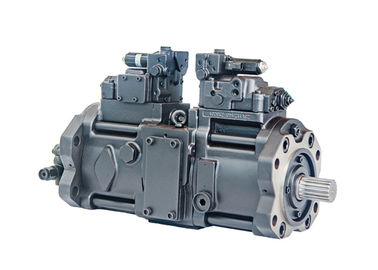
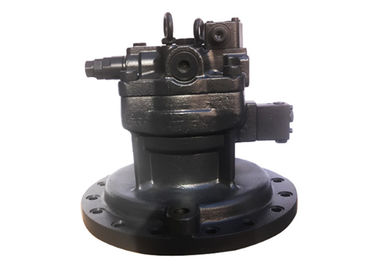
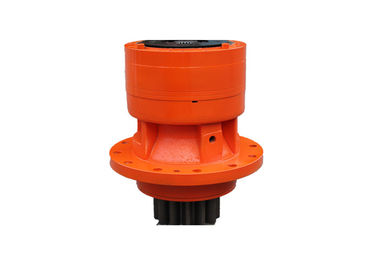
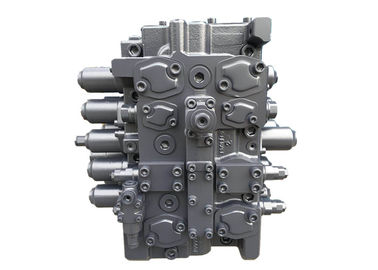
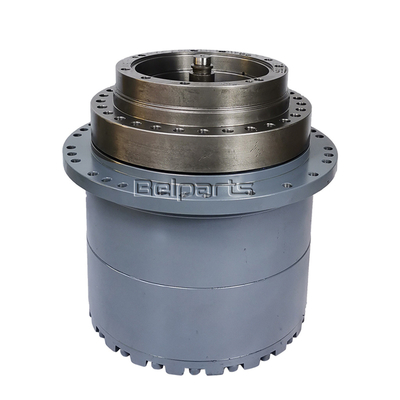
This is also relevant to the aftermarket and spare parts industry. Autonomous excavators will still depend on essential hydraulic and mechanical components such as hydraulic pumps, main control valves, travel motors, swing systems and final drives. At the same time, increasingly intelligent machines will also rely more heavily on sensors, electronic control systems and data-based diagnostics.
As a result, the future excavator may not simply be a machine with more powerful hardware. It may become a connected system in which mechanical components, hydraulic systems, electronics and AI work together.
Hitachi Construction Machinery's September announcement is an important step in the development of AI-based excavator technology, but it should not be interpreted as evidence that fully autonomous excavators are already ready for widespread use.
The company is currently beginning a research and development project. Real-world construction sites involve changing terrain, weather, obstacles, other machines and people, making reliable autonomous operation a complex technical challenge.
For now, the industry appears to be moving through several stages: machine monitoring, operator assistance, remote operation, partial automation and, ultimately, more autonomous operation.
Hitachi's Physical AI project represents another step in that progression. If the technology can successfully learn from experienced operators and adapt to real-world construction conditions, it could become an important part of the next generation of excavators.